You’re spending ₹2 lakhs a month on digital marketing. The dashboard shows 500 new leads. Your agency sends you beautiful reports with graphs trending upward. Everything looks perfect.
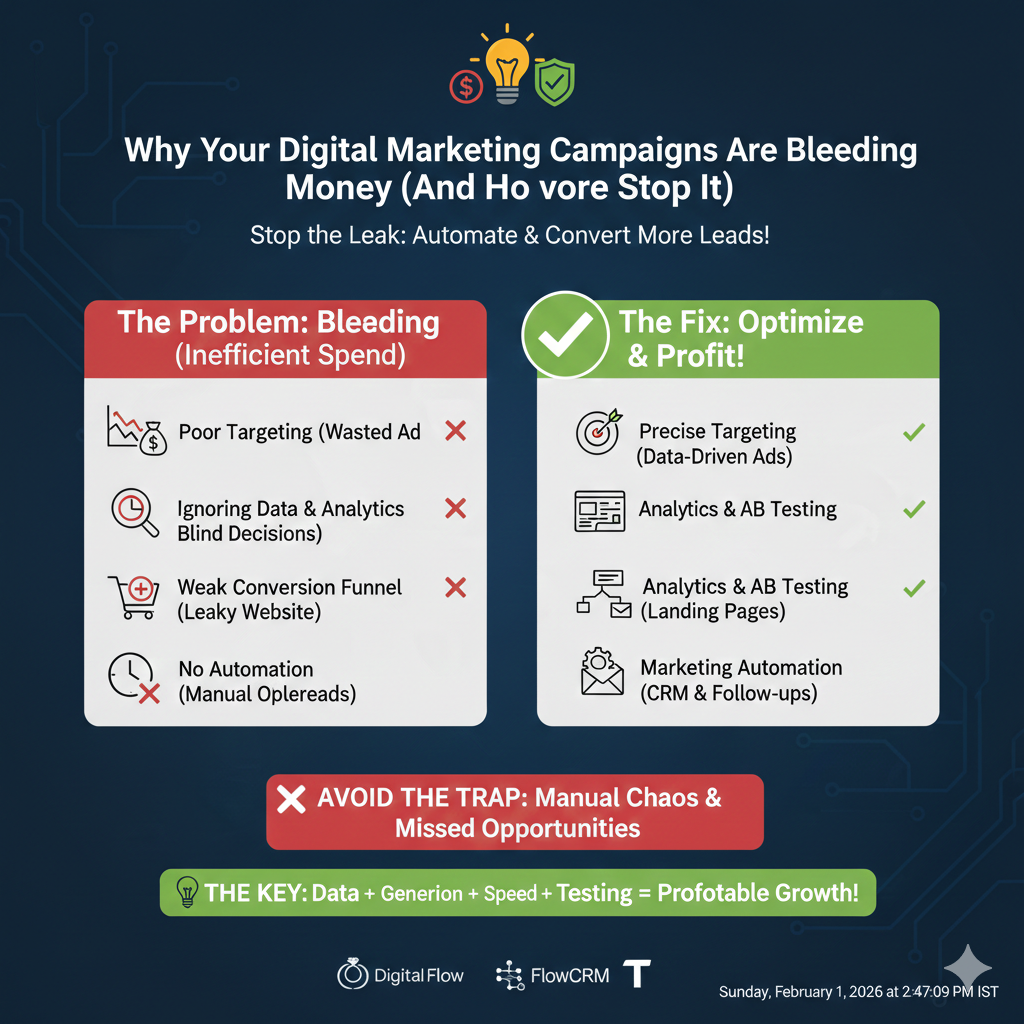
Except your sales team is furious.
“These leads are garbage,” they tell you. “Half the emails bounce. The other half never responds. We’re wasting hours chasing ghosts.”
This scenario plays out in thousands of businesses across India. Companies hire digital marketing agencies, pay premium prices, and watch their cost-per-lead metrics improve on paper while their actual revenue stays flat. The problem isn’t your sales team’s incompetence or your product’s market fit.
The problem is that a significant portion of your “leads” were never real to begin with.
The Hidden Tax on Digital Marketing ROI
When businesses evaluate digital marketing agencies, they look at metrics like cost-per-lead, click-through rates, and conversion percentages. These numbers tell a story of efficiency and optimization. But they rarely account for lead quality degradation, a silent killer of marketing ROI that most agencies won’t discuss openly.
Lead quality degradation happens when your marketing funnel attracts signups that look legitimate in your analytics but represent zero commercial value. These aren’t just unqualified prospects who aren’t ready to buy. These are fundamentally unusable contacts that will never convert regardless of how sophisticated your nurture sequence is.
Consider the math: If you’re paying ₹400 per lead and 30% of those leads are effectively worthless, you’re actually paying ₹571 per real lead. Your sales team wastes time on phantom prospects. Your email sender reputation suffers from high bounce rates. Your retargeting campaigns burn budget, showing ads to people who will never see them.
The total cost is far higher than the wasted ad spend alone.
Where the Fake Leads Come From
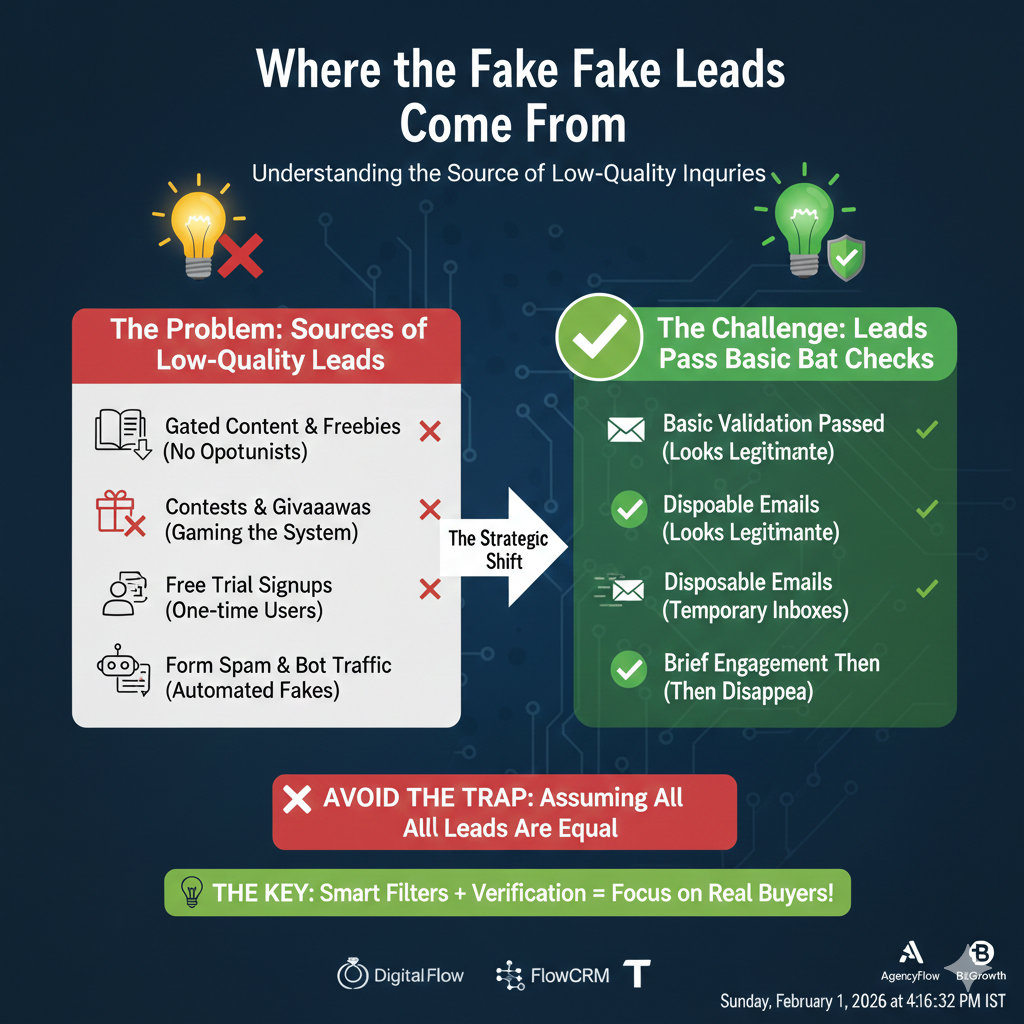
Digital marketing agencies aren’t intentionally delivering bad leads. The problem stems from how modern lead generation works at scale.
Gated content and freebies attract opportunists. When you offer a valuable ebook, template, or tool in exchange for an email address, you attract two groups: genuine prospects interested in your solution, and people who want the freebie with zero interest in your business. The second group has learned that providing a quick throwaway email gets them what they want without the “spam” of follow-up emails.
Contest and giveaway mechanics encourage gaming. Run a “enter your email to win” contest, and you’ll see a spike in registrations. What the analytics won’t show clearly is how many people are creating multiple entries using different disposable addresses to increase their odds. Your campaign looks successful, but the commercial value is minimal.
Trial signups from non-serious users. SaaS companies and digital services offering free trials face an interesting challenge. Some users genuinely want to evaluate the product. Others want to use the trial period for a one-time project with no intention of paying. Disposable emails let them avoid the eventual sales outreach.
Form spam and bot traffic. Despite CAPTCHA and other protections, automated systems still generate fake form submissions. Some use random email addresses, others use temporary inboxes that receive the verification email just long enough to complete signup before vanishing.
The common thread? These leads pass basic validation checks. They’re not obviously fake. They might even engage briefly before disappearing forever.
Why Your Agency Doesn’t Flag This Problem
This is uncomfortable territory, but it needs addressing: many digital marketing agencies lack incentive to aggressively filter lead quality.
When agencies get paid based on lead volume or charge retainers with performance bonuses tied to lead count, there’s a subtle misalignment. A lead that counts toward their KPIs but never converts still helps them hit their numbers. They’re not being malicious, they’re just optimized for different success metrics than you are.
The more sophisticated issue is that agencies often don’t have visibility into what happens after leads enter your CRM. They see the form submission, maybe the email verification, but they don’t sit in on sales calls where the pattern becomes obvious. They don’t track which leads from their campaigns actually become customers six months later.
This creates a knowledge gap. Your sales team knows these leads are problematic. Your agency’s reports show campaign success. And you’re stuck in the middle trying to reconcile two contradictory stories about the same marketing spend.
The Real Cost Beyond Wasted Ad Spend
The immediate financial waste is obvious, you paid for leads that will never buy. But the secondary costs are often larger and less visible.
Your sales team develops campaign fatigue. After calling 50 leads that don’t answer or immediately hang up, they start to trust the marketing funnel less. They might even stop following up as quickly on legitimate leads because they assume it’s more junk. This delays response times for your real prospects, lowering your actual conversion rate.
Email deliverability suffers compound damage. When a significant portion of your email list consists of addresses that bounce or never engage, email providers notice. Your sender reputation declines. Eventually, even your legitimate prospects start seeing your emails land in spam folders. This affects not just marketing emails but also transactional communications and customer service.
Your retargeting pixel tracks users who will never see your ads. When someone uses a disposable email to download your lead magnet, your pixel fires and adds them to your retargeting pool. You’re now paying to show ads to people who won’t see them, either because the email was abandoned or because they used privacy tools that block your tracking. Your retargeting ROAS drops, and you can’t figure out why.
Budget allocation becomes distorted. If you believe a channel is generating 100 leads per month at ₹500 each when only 70 are real, you might over-invest in that channel at the expense of channels with better actual ROI. Your entire marketing mix optimization is based on contaminated data.
How Smart Businesses Are Fighting Back
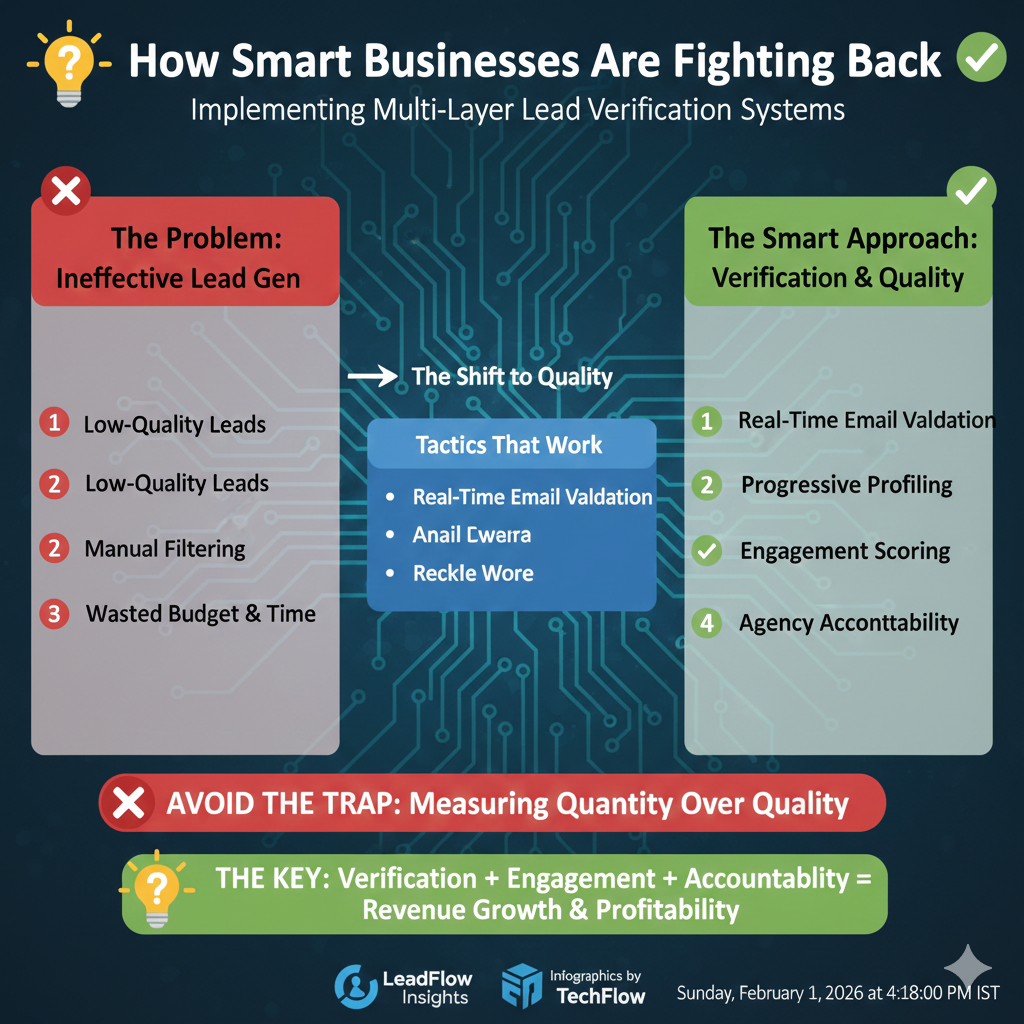
The most sophisticated companies have started implementing multi-layer lead verification systems that catch problematic signups before they pollute the database.
Real-time email validation at the point of capture. Instead of accepting any syntactically valid email address, smart forms now check if the email domain is associated with disposable email services. This happens instantly during signup, allowing legitimate users through while blocking obvious throwaways. Companies that implement this typically see their cost-per-qualified-lead drop by 20-40% as the junk gets filtered out before entering the CRM.
Progressive profiling that filters casual browsers. Rather than asking for everything upfront, high-performing funnels use a multi-step approach. The first step might only ask for email and first name. Subsequent steps ask for company details, phone number, and specific pain points. Serious prospects complete these steps. Freebie hunters drop off when they realize there’s more friction than just typing a throwaway address.
Engagement scoring in the first 72 hours. The best lead scoring models don’t just look at demographic fit, they track early behavior. Did the contact open the welcome email? Visit the pricing page? Download additional resources? Someone who provides a real email and has genuine interest will demonstrate engagement signals. Those signals become filters that help sales prioritize their time.
Agency accountability through closed-loop reporting. Smart businesses demand that their marketing agencies have visibility into what happens after the lead is generated. They share CRM data showing which campaigns actually produce customers, not just form fills. This forces agencies to optimize for quality, not just quantity. When agencies know they’ll be judged on deals closed, not leads delivered, their tactics change.
The companies doing this best treat lead verification as infrastructure, not an afterthought. It’s built into their forms, their automation, and their agency contracts from day one.
What to Ask Your Digital Marketing Agency Tomorrow
If you’re working with a digital marketing agency, here are the conversations worth having this week:
“What percentage of leads from our campaigns are disposable or temporary email addresses?” If they don’t know, that’s your answer. If they know but haven’t mentioned it, ask why. If they claim it’s zero, they’re either lying or not paying attention.
“How do you filter lead quality before delivery to our CRM?” The best agencies implement validation layers before a lead ever reaches you. They should be able to explain their process for identifying and removing problematic contacts.
“Can we implement real-time email verification on our forms?” This should be technically straightforward for any competent agency. If they resist, ask why. Common objections like “it’ll hurt our conversion rate” need to be tested, not assumed.
“What happens to our performance metrics if we only count qualified leads?” Request a report that shows campaign performance based on leads that actually engaged with your sales process, not just those that filled out a form. This will reveal which channels and campaigns are truly driving value.
“Will you agree to bonuses tied to closed deals rather than lead volume?” This is the ultimate alignment test. Agencies confident in their lead quality will consider performance incentives based on actual revenue, not just traffic and form fills.
These questions aren’t confrontational, they’re collaborative. A good agency will welcome the conversation about improving lead quality because it makes their campaigns more successful and your business more profitable. An agency that gets defensive might not be aligned with your actual goals.
The Path Forward
Digital marketing agencies provide immense value when they’re optimized for the right outcomes. The challenge is ensuring that the metrics driving their optimization match the metrics that matter to your business: real prospects that can become real customers.
This starts with infrastructure. Before launching the next campaign, ensure your forms have proper validation. Implement email verification that filters out disposable addresses at the point of capture. Build engagement scoring that helps sales focus their energy on genuine prospects.
Then align incentives. Work with your agency to redefine success metrics around quality, not just quantity. Share CRM data so they can see which campaigns actually drive revenue. Consider performance incentives tied to closed deals rather than raw lead volume.
Finally, measure what matters. Track not just cost-per-lead but cost-per-qualified-lead and cost-per-customer. Watch your sales team’s conversion rates on leads from different campaigns. Monitor email deliverability and engagement metrics as leading indicators of database health.
The businesses winning at digital marketing aren’t spending more; they’re spending smarter. They’ve stopped accepting vanity metrics that look good in reports but don’t translate to revenue. They’ve stopped letting 30% of their marketing budget disappear into a black hole of fake leads and wasted sales time.
Your digital marketing should be an investment that compounds over time, building a database of engaged prospects and customers. When lead quality is protected, that’s exactly what happens. When it’s not, you’re just renting temporary attention that evaporates as soon as the campaign ends.
The difference between these two outcomes is often as simple as asking better questions, implementing basic verification, and holding agencies accountable for outcomes that actually matter to your business.
Your sales team will thank you. Your CFO will thank you. And your marketing ROI will finally start reflecting the quality of work your agency is actually capable of delivering.
Conclusion
At the end of the day, the problem isn’t that digital marketing doesn’t work—it’s that too many businesses mistake activity for impact. Dashboards full of leads feel reassuring, but if those leads can’t be contacted, won’t engage, or were never serious to begin with, you’re not building a pipeline—you’re feeding an illusion.
Real growth comes from protecting quality at the source: filtering junk before it hits your CRM, aligning your agency around revenue instead of volume, and measuring success by customers, not clicks. When you clean up your lead flow, something surprising happens—your numbers may look smaller, but your results get bigger. Sales conversations improve.
Close rates rise. Wasted hours disappear. And suddenly, the same budget that once felt wasteful starts compounding like a true investment. Because in the end, ten real prospects are always worth more than a hundred ghosts—and smart marketing is about attracting the right people, not just more of them.