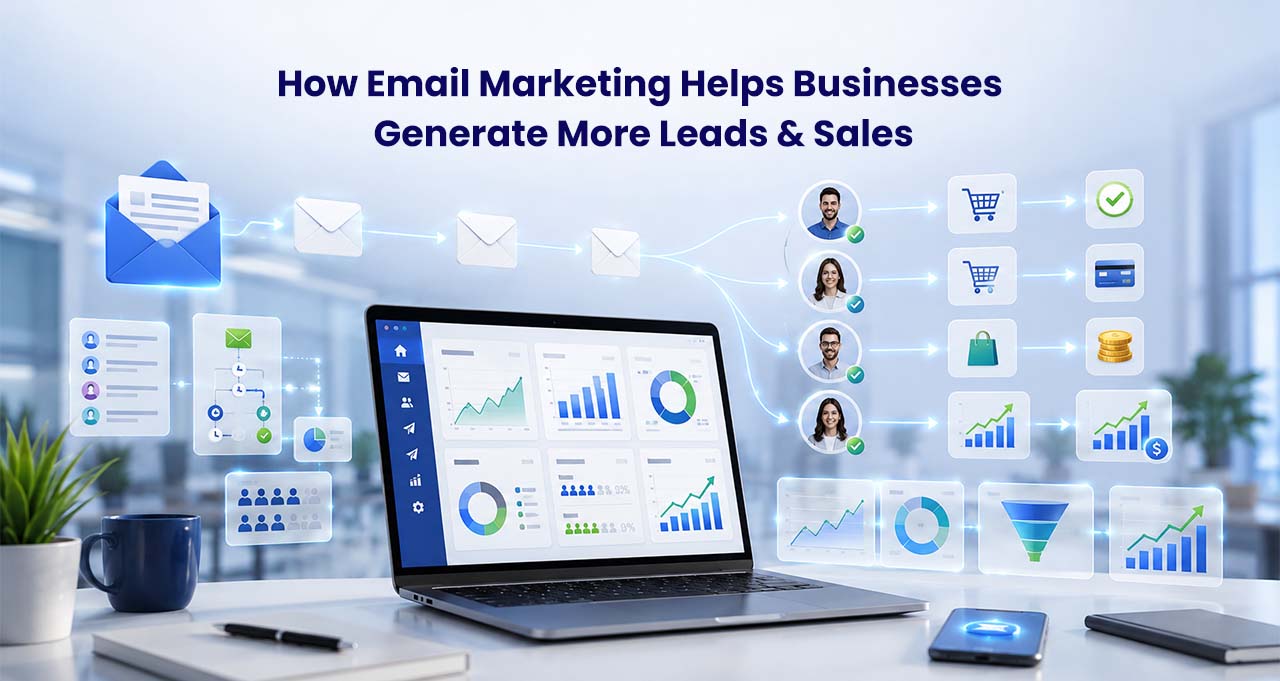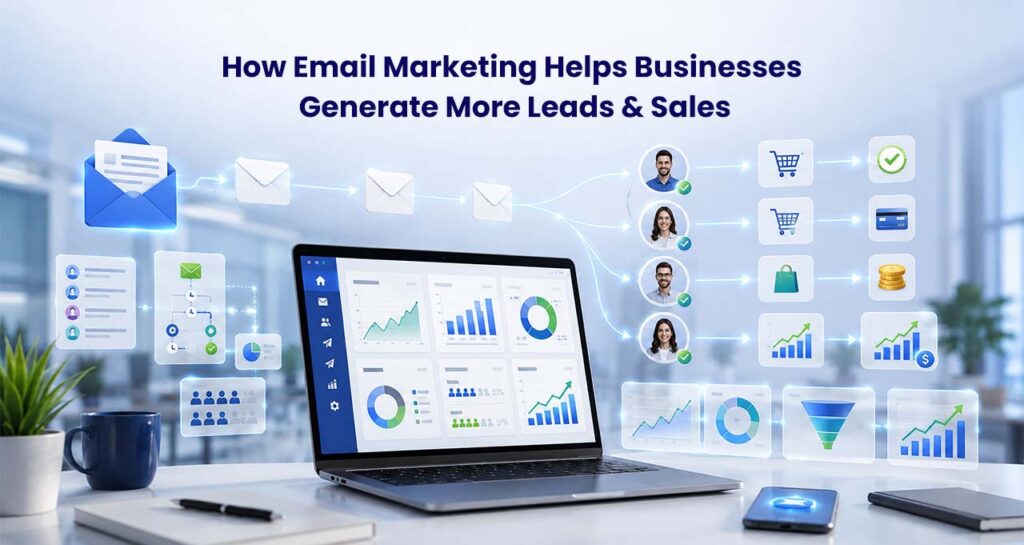
Email marketing is one of the simplest ways for a business to stay connected with potential and existing customers. It allows companies to send useful information, offers, product updates, and reminders directly to people who have shown interest in their business.
From ecommerce stores and real estate companies to hotels, SaaS businesses, airlines, and healthcare brands, email marketing is used to attract customers, build relationships, and increase sales.
But how does a simple email actually help a business generate leads and revenue?
Let’s understand the basics.
What Is Email Marketing?
Email marketing means using email to communicate with customers or potential customers for business purposes.
For example, imagine someone visits an online clothing store but does not purchase anything.
The business can invite that visitor to subscribe to its email list. Later, the company can send emails about:
- New collections
- Special offers
- Product recommendations
- Seasonal sales
- Shopping guides
- Abandoned carts
The customer may return to the website and eventually make a purchase.
This is one of the basic ways email marketing can support sales.
Why Do Businesses Use Email Marketing?
People do not always buy something the first time they discover a business.
A customer may:
- Visit a website
- Check a product
- Compare prices
- Ask for information
- Leave the website
- Think about the purchase
- Come back later
Without follow-up, the business may lose that potential customer.
Email gives businesses a way to continue the conversation.
Instead of trying to sell immediately, the business can provide useful information and gradually build interest.
How Email Marketing Generates Leads
A lead is a person who has shown interest in a business and may become a customer.
For example, a real estate company could have a website where visitors search for apartments.
The company can offer a free guide such as:
“Dubai Property Buying Guide 2026”
A visitor enters their email address to receive the guide.
That visitor has now become a potential lead.
The company can later send:
- New property listings
- Price updates
- Area guides
- Market information
- Property viewing opportunities
- Financing information
The goal is to help the potential buyer move closer to contacting the sales team.
Example: Ecommerce Business
Consider a large online fashion business.
A customer visits the website and looks at several shoes but does not purchase.
The company could send an email later saying:
“Still Looking for the Perfect Pair?”
The email could show the products the customer viewed and provide a button such as:
View Your Products
If the customer returns and purchases, email marketing has helped recover a potential sale.
This is known as an abandoned browsing or remarketing approach, depending on how the campaign is implemented.
Example: Amazon-Style Ecommerce Marketing
Large ecommerce platforms use email extensively to keep customers engaged.
Customers may receive emails about:
- Products they viewed
- Previous purchases
- Related products
- Deals
- Order updates
- Recommendations
- Special events
For example, someone who purchases a camera may later receive recommendations for camera bags, memory cards, tripods, or other accessories.
The idea is simple:
Previous customer activity → Relevant recommendation → Website visit → Potential additional purchase
Example: Netflix and Entertainment Businesses
Entertainment companies can use email to bring users back to their platforms.
For example, an entertainment service may notify a subscriber about:
- A new season
- New movies
- Recommended content
- New releases
- Unfinished content
The objective is not always to make an immediate sale. It can also be to increase customer engagement and reduce the chance that customers stop using the service.
This shows an important point:
Email marketing can support customer retention as well as sales.
Example: Travel and Airlines
Travel companies have many opportunities to use email marketing.
A customer who previously searched for flights may receive information about:
- New destinations
- Seasonal travel offers
- Flight deals
- Hotel packages
- Travel guides
- Holiday promotions
For example:
Customer searches for Dubai → Receives Dubai travel content → Sees hotel or flight offer → Returns to booking website
Email helps the company remain visible while the customer is planning a trip.
Example: Hotels
Hotels can use email before, during, and after a customer’s stay.
Before the trip, an email might provide:
- Check-in information
- Hotel facilities
- Restaurant information
- Local attractions
After the stay, the hotel may send:
- Feedback requests
- Loyalty offers
- Future stay promotions
- Seasonal packages
This helps turn a one-time guest into a returning customer.
Example: SaaS and Software Companies
Software companies often have customers who need time to understand a product before purchasing.
For example, someone may register for a free trial of a software platform.
The company can then send a series of useful emails:
Day 1: Welcome and setup instructions
Day 3: Important features to try
Day 5: Helpful tutorial
Day 7: Customer success example
Day 10: Upgrade options
Instead of simply saying “Buy now,” the company helps the user understand the product.
If the user finds the software useful, they may become a paying customer.
Example: Healthcare and Wellness Businesses
Healthcare and wellness businesses can also use email to maintain communication with customers, where appropriate and with proper consent.
For example, a wellness company may send:
- Educational articles
- Product information
- General wellness tips
- New product announcements
- Promotional offers
- Appointment reminders
An ecommerce wellness brand could also send customers information about products related to their previous purchases.
The content should remain useful and responsible rather than making unsupported health claims.
Email Marketing Helps Build Trust
People are more likely to consider a business when they understand what it offers and believe it can solve their problem.
Regular useful emails can help businesses demonstrate knowledge and stay familiar to their audience.
For example, a digital marketing company could send:
- SEO tips
- Advertising insights
- Website improvement ideas
- Case studies
- Industry updates
After receiving useful information over time, a potential customer may eventually think:
“This company understands my problem. I should contact them.”
That is how email can contribute to lead generation without directly selling in every message.
What Is an Email List?
An email list is a collection of people who have agreed to receive emails from a business.
A business can build its list through:
- Website signup forms
- Newsletter subscriptions
- Free resources
- Online events
- Product registrations
- Consultation forms
- Purchases
- Lead generation campaigns
A smaller list of genuinely interested people can be more valuable than a large list of unrelated contacts.
What Should Businesses Send?
A common mistake is thinking email marketing means sending discounts every week.
Good email marketing can include different types of content.
Educational Emails
Teach the audience something useful.
Example:
“5 Things to Check Before Buying a Commercial Refrigerator”
Promotional Emails
Promote a product, service, discount, or special offer.
Example:
“Summer Sale: Up to 30% Off Selected Products”
Product Emails
Introduce new products or explain product features.
Example:
“Meet Our New Temperature Data Logger”
Company Updates
Share important business news, achievements, events, or announcements.
Customer Stories
Show how a product or service helped a customer.
Reminder Emails
Remind customers about unfinished actions.
For example:
“You Left Something in Your Cart”
What Is a Call to Action?
A call to action, often called a CTA, tells the reader what to do next.
Examples include:
- Shop Now
- Get a Quote
- Book Now
- View Products
- Learn More
- Contact Us
- Download Guide
- Start Free Trial
A good email should make the next step clear.
Personalization in Email Marketing
Personalization means making an email more relevant to the individual receiving it.
For example:
Instead of:
“Hello Customer”
a business may use:
“Hi John, here are some products you may like.”
Personalization can also go beyond a customer’s name.
A company can consider:
- Previous purchases
- Product interests
- Location
- Website activity
- Customer type
- Previous enquiries
For example, a customer who regularly purchases men’s sportswear may receive information about new sportswear arrivals rather than unrelated products.
What Is Email Automation?
Email automation means sending emails automatically based on a customer’s action or a predefined condition.
For example:
Customer subscribes → Welcome email
Customer purchases → Order confirmation
Customer leaves products in cart → Cart reminder
Customer completes purchase → Follow-up email
Customer has not purchased for a long time → Re-engagement email
Automation saves time and allows businesses to communicate with customers at the appropriate stage.
How Email Marketing Supports the Sales Funnel
Email can be useful at different stages of the customer journey.
Awareness
A person discovers your business.
Example: They subscribe to your newsletter.
Interest
They start learning about your products or services.
Example: They receive educational content.
Consideration
They compare options and evaluate your business.
Example: They receive product information or a case study.
Decision
They are ready to take action.
Example: They receive an offer or consultation invitation.
Retention
They become an existing customer.
Example: They receive useful follow-up content and relevant product recommendations.
So the journey can look like:
Visitor → Subscriber → Lead → Customer → Repeat Customer
How to Measure Email Marketing Results
Businesses should not judge an email campaign only by how many emails were sent.
Important metrics include:
Open Rate
How many recipients opened the email.
Click Rate
How many people clicked a link or button.
Conversion Rate
How many people completed the desired action.
Leads Generated
How many enquiries or potential customers came from the campaign.
Sales Generated
How much revenue was generated from the campaign.
Unsubscribe Rate
How many people stopped receiving emails.
These numbers help businesses understand what is working and what needs improvement.
Common Email Marketing Mistakes
Sending Too Many Emails
Customers may become annoyed if they receive unnecessary messages too frequently.
Only Sending Sales Messages
If every email asks customers to buy something, engagement may decrease.
Using Irrelevant Content
A message should match the audience’s interests.
Having a Weak Subject Line
The subject line should clearly communicate why the email is worth opening.
No Clear CTA
The reader should understand what to do next.
Not Optimizing for Mobile
Emails should be easy to read on smartphones and tablets.
Buying Email Lists
Purchased lists can contain irrelevant or low-quality contacts and may create compliance and deliverability problems. Businesses should build permission-based lists.
A Simple Example of an Email Marketing Journey
Imagine an online furniture company.
A visitor searches Google for:
“Best office chair for home office”
They visit the company’s website and download a free buying guide by entering their email address.
The company can then send:
Email 1: Office chair buying guide
Email 2: How to choose the right chair
Email 3: Popular office chair models
Email 4: Customer reviews
Email 5: Special offer
The visitor now has several opportunities to return to the website and make a purchase.
This is a simple example of how content, email, and sales can work together.
How Businesses Can Get Better Results From Email Marketing
Businesses can improve their campaigns by focusing on a few basic principles:
Know your audience
Understand what your customers need and what problems they are trying to solve.
Provide value
Give people a reason to continue receiving your emails.
Keep messages clear
Avoid unnecessary information and complicated designs.
Use relevant offers
Promote products or services that match the customer’s interests.
Test different approaches
Try different subject lines, content, offers, and CTAs to understand what performs better.
Track results
Use campaign data to improve future emails.
Email marketing is more than sending promotional messages to a list of customers.
It can help businesses attract leads, educate potential customers, build trust, recover missed opportunities, increase repeat purchases, and maintain long-term customer relationships.
The biggest advantage is that businesses can communicate directly with people who have already shown interest.
Whether it is an ecommerce company recommending products, a hotel promoting a future stay, a software company converting trial users, a real estate company nurturing property enquiries, or a travel company promoting a new destination, email marketing can support customers throughout their buying journey.
When email marketing is combined with a strong website, SEO, social media, paid advertising, and a clear sales process, it can become an important channel for generating both leads and sales.
Frequently Asked Questions About Email Marketing
1. What is the main purpose of email marketing?
The main purpose of email marketing is to communicate directly with potential and existing customers. Businesses use it to generate leads, promote products and services, build customer relationships, increase website traffic, and encourage sales.
2. How does email marketing help generate leads?
Businesses can collect email addresses through website forms, newsletters, free guides, consultations, downloads, and other offers. They can then send useful and relevant content to these contacts and gradually move interested prospects toward making an enquiry or purchase.
3. How often should a business send marketing emails?
There is no single frequency that works for every business. It depends on the audience, industry, and type of content. The focus should be on sending useful and relevant emails rather than sending messages too frequently.
4. Can small businesses benefit from email marketing?
Yes. Email marketing can be useful for businesses of different sizes. A small business can use it to follow up with enquiries, promote offers, share updates, maintain customer relationships, and encourage repeat purchases without needing a very large audience.
5. How can businesses measure whether email marketing is working?
Businesses can track metrics such as open rate, click-through rate, conversion rate, leads generated, sales, and unsubscribe rate. These results help identify which campaigns are performing well and where improvements are needed.
Ready to Turn More Leads Into Customers?
Email marketing can help your business stay connected with potential customers, build trust, and create more opportunities for sales.
Whether you need email campaign planning, promotional emails, automated follow-ups, customer retention campaigns, or complete email marketing management, a clear strategy can make your communication more effective.
Want to grow your business with smarter email marketing?
Contact Webnic Digital Solutions today and start building an email marketing strategy focused on leads, engagement, and sales.